
BACK TO SCHOOL

This resource toolkit brings together up-to-date resources from trusted organizations, including tools, data, and links designed to support young people, caregivers, and professionals in finding the help and information they need.*
*All data and links were accurate at the time of publication, but may change over time.
FOR URGENT SUPPORT TEXT OR CALL 988
Information for:
The beginning of a new school year brings new opportunities, new relationships, and new routines—but it can also bring stress, uncertainty, and big emotions. Whether you're a student finding your place, a caregiver supporting a child through change, or an educator creating a welcoming classroom, mental health deserves to be part of the conversation from day one.
This toolkit offers practical resources and ideas to help school communities create environments where everyone feels supported, connected, and empowered to care for their mental well-being throughout the year.
EVERYONE
The start of a new school year is more than just new classrooms and schedules—it's a season of transition. Whether you're a student, caregiver, educator, or community member, adjusting to new routines, expectations, and relationships can bring a mix of emotions. Excitement, nervousness, stress, hope, and uncertainty are all normal parts of change.
Transitions are easier to navigate when we know where to turn for support. Having access to trusted people, reliable mental health resources, and opportunities to check in with ourselves and others can make a meaningful difference throughout the school year. Building a culture where conversations about feelings are welcomed helps everyone feel more connected and supported.
As the school year begins, take time to explore mental health resources that can support you, your family, or your school community. Whether you're looking for coping strategies, conversation starters, or ways to strengthen emotional well-being, these organizations offer free, evidence-based tools:

Mental Health America (MHA): Resources for managing stress, building resilience, and supporting youth and families.

Mental Health Coalition: A collection of mental health information, educational tools, and support resources for all ages.


YOUTH

RESOURCES
The start of a new school year is the perfect time to build your support system. Having trusted peers and adults can make school feel less overwhelming. Whether you're excited, nervous, stressed, or somewhere in between, talking about your feelings is a sign of strength.
The beginning of the school year is an ideal time to establish Peer-to-Peer (P2P) Wellness Groups.
These structured, facilitated groups give students opportunities to:
-
Connect with peers
-
Practice emotional regulation
-
Develop healthy coping skills
-
Strengthen belonging
-
Reduce stigma surrounding mental health
Bring a Peer-to-Peer (P2P) Wellness Group idea to a supportive teacher or staff member by sharing the P2P guide and the readiness checklist/ implementation from the Free Your Feels Blueprint Implementation Guide 2.0!

Explore these resources to learn more about stress, coping skills, and more:
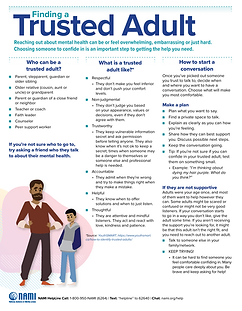
Use this guide from the National Alliance on Mental Illness (NAMI) to learn why having a trusted adult matters and how you can identify one in your life.
CAREGIVERS
Back-to-school season often means new routines, changing schedules, and increased stress for the whole family. Checking in regularly—not just about homework, but about emotions—helps children feel safe, heard, and supported.

Rather than asking:
"How was school?"
Try questions like:
-
“What made you smile today?”
-
“What challenged you today?”
-
“Who did you spend time with?”
-
“How are you feeling about school this week?”
Creating a supportive home environment doesn't have to be complicated. Small, consistent habits can help young people feel heard, connected, and prepared to navigate the school year. Consider incorporating some of these into your family's routine:
-
Schedule a weekly family check-in to talk about highs, lows, and feelings.
-
Create consistent morning and bedtime routines to provide structure and reduce stress.
-
Keep school and community mental health resources in a visible place for easy access.
-
Read your school's monthly newsletter together and use it as a conversation starter about emotional well-being.
Explore these resources to learn more about how you can support your student this school year:


Nurturing a young person’s mental health takes collaboration. Explore the essential healthcare and school-based resources available from Mindscape here.
JED offers resources to help caregivers recognize mental health warning signs, start meaningful conversations, and support young people as they navigate school, relationships, and life's challenges.
EDUCATORS & PROFESSIONALS
The beginning of a new school year is an opportunity to intentionally build a school culture where students feel seen, supported, and connected. Embedding mental health into everyday school life through consistent wellness messaging, trusted adult initiatives, student leadership, and school-wide programming can help create an environment where every student belongs. Programs like Feelings Fridays and Peer-to-Peer Wellness Groups offer meaningful opportunities to normalize conversations about mental health, build coping skills, and strengthen connections throughout the school year.
Consider incorporating mental health into your school's annual wellness efforts by:
-
Launching monthly Feelings Fridays to promote emotional awareness and healthy coping
-
Establishing Peer-to-Peer Wellness Groups to foster connection and student support.
-
Sharing a monthly mental health resource through family newsletters or school communications
-
Creating a wellness resource space or bulletin board
-
Promoting trusted adults and available support services throughout your school

Consider scheduling an MHAT training today by accessing the catalog of courses. The Georgia Department of Education’s Mental Health Awareness Training (MHAT) program offers free mental health training for schools! Choose from 40+ training options.


Not seeing a resource you need? Email us freeyourfeels@gmail.com and let's work together on creating resources that support the mental health and wellbeing of Georgia’s young people
If you or someone you know is in a crisis situation, please call or text 988 for 24/7 support.
Free Your Feels is not a mental health provider and does not offer crisis services.
Additional topics and resources are available in the Resource Library.
